5 Balcony Gardening Tips for Small Urban Spaces
Balcony gardening can produce far more food and beauty than most people expect — but small spaces punish bad planning fast. Limited sunlight, tight layouts, poor drainage, and overcrowding can turn a balcony garden into frustration within weeks.
The good news: with the right setup, even a tiny balcony can become a productive growing space for herbs, vegetables, flowers, and container-friendly crops.
Here are 5 practical tips to help you build a healthier, more efficient balcony garden.
1. Choose the Right Plants
Selecting the right plants is the foundation of any successful balcony garden. Since balconies create unique microclimates based on sunlight, wind exposure, and temperature, choosing crops that match your conditions is critical.
Assess Your Balcony Environment
Sunlight
Determine how much direct sunlight your balcony receives daily.
- 6+ hours of direct sun: tomatoes, peppers, and marigolds
- 3–6 hours: lettuce, herbs, and ferns
- Mostly shade: ivy, mint, and caladium
Wind Exposure
High-rise balconies often experience strong winds that damage delicate plants.
Better wind-tolerant options include:
- lavender
- rosemary
- succulents
You can also use:
- mesh screens
- trellises
- balcony panels
These can help protect fragile crops from harsh wind exposure.
Temperature
Urban balconies heat up quickly in summer and cool rapidly in winter. Choose heat-tolerant crops like basil or drought-tolerant flowers for harsh metro climates.
Best Balcony Plant Types
Edible Plants
Compact crops perform best:
- cherry tomatoes
- dwarf peppers
- herbs
- baby carrots
Ornamental Plants
Add color with:
- petunias
- pansies
- geraniums
Climbing Plants
Maximize space vertically using:
- nasturtiums
- morning glories
- English ivy
Pro Tip
Mix edible and ornamental plants together. Marigolds, for example, help deter pests while adding color to your balcony garden.
2. Use Lightweight Containers
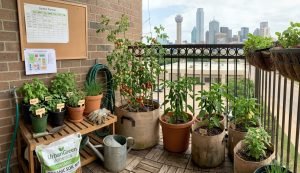
Balconies often have weight limitations, making container selection extremely important. Lightweight containers allow you to grow more without overloading your space.
Best Container Options
Plastic & Fabric Pots
- lightweight
- affordable
- easy to move
- excellent for vegetables
Fabric grow bags work especially well for:
- potatoes
- carrots
- peppers
Hanging Pots
Use lightweight resin or plastic hanging containers to avoid excess structural strain.
Self-Watering Containers
Self-watering containers are great for:
- reducing watering frequency
- preventing dry soil cycles
- maintaining consistency
Smart Container Tips
- Use wide, shallow containers for herbs and greens.
- Use deeper pots for root vegetables.
- Add wheels under heavy containers.
- Avoid excessive ceramic or terracotta weight.
Pro Tip
Upcycle buckets, crates, or storage containers into low-cost lightweight planters.
3. Optimize Vertical Space
When floor space is limited, vertical gardening becomes essential. Growing upward allows you to increase production without overcrowding your balcony.
Vertical Gardening Ideas
Wall-Mounted Planters
Wall-mounted planters are perfect for:
- herbs
- flowers
- succulents
Trellises
Support climbing crops like:
- cucumbers
- pole beans
- flowering vines
Trellises also improve privacy on apartment balconies.
Hanging Baskets
Hanging baskets are excellent for:
- trailing flowers
- strawberries
- herbs
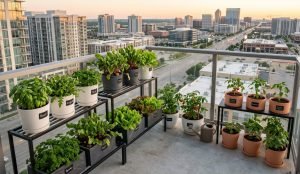
Shelves & Tiered Stands
Tiered setups increase growing area while keeping plants organized and accessible.
Pro Tip
Repurpose ladders, pallets, or shower caddies into creative vertical planting systems.
4. Manage Sunlight Effectively
Sunlight management is one of the biggest challenges in balcony gardening. Understanding how light moves across your space dramatically improves growing success.
How to Maximize Sunlight
Map Sun Patterns
Track:
- morning sun
- afternoon sun
- shaded areas
- reflected heat
Position Plants Strategically
Place these crops in the brightest areas:
- tomatoes
- peppers
- basil
Move these crops into partially shaded zones:
- herbs
- leafy greens
- ferns
Use Reflective Surfaces
Light-colored walls or reflective materials can bounce sunlight into darker areas.
Use Grow Lights If Needed
LED grow lights help supplement shaded balconies or indoor growing spaces.
Pro Tip
Rotate containers regularly so all sides receive equal light exposure.
5. Maintain Proper Drainage
Poor drainage destroys balcony gardens quickly. Excess moisture causes:
- root rot
- fungal problems
- unhealthy soil
- water runoff issues
Proper drainage keeps plants healthier and protects neighboring apartments from dripping water.
How to Improve Drainage
Use Containers with Drainage Holes
Always avoid sealed pots.
Add Drainage Layers
Use:
- gravel
- pebbles
- coarse sand
Place them at the bottom of containers to help reduce waterlogging.
Use Saucer Trays
Catch excess runoff to avoid leaking water onto neighboring balconies.
Avoid Overwatering
Check soil moisture before watering. Container gardens fail from overwatering more often than underwatering.
Pro Tip
Self-watering containers or drip irrigation systems help maintain more consistent hydration.
Planning Matters More Than People Think
Planning your layout before planting improves:
- airflow
- spacing
- sunlight management
- watering access
- overall efficiency
Small urban spaces punish disorganization quickly. A simple plan often determines whether a balcony garden thrives or fails.
Final Thoughts
Balcony gardening combines creativity, efficiency, and sustainability to transform even the smallest urban spaces into productive growing environments. With the right plants, proper drainage, vertical growing systems, and thoughtful planning, even a tiny balcony can become a thriving food garden or peaceful green retreat.
FAQ
What vegetables grow best on balconies?
Compact crops like peppers, lettuce, herbs, cherry tomatoes, and bush beans grow well in balcony containers.
How much sunlight does a balcony garden need?
Most vegetables need at least 6 hours of direct sunlight, though herbs and leafy greens can tolerate partial shade.
Are fabric grow bags good for balcony gardens?
Yes. Fabric grow bags are lightweight, improve drainage, and work well for vegetables like potatoes, peppers, and carrots.
How do I stop my balcony garden from overcrowding?
Use vertical gardening systems, tiered shelving, and proper plant spacing to improve airflow and reduce competition.
Is balcony gardening worth it financially?
Growing herbs, lettuce, peppers, and green onions can significantly reduce grocery spending over time, especially in large metro areas with higher produce costs.