Why Apartment Gardens Fail Before Harvest
Most apartment gardens fail before harvest for reasons that have almost nothing to do with talent.
That matters, because a lot of beginners blame themselves way too early. They plant a few containers on a balcony, patio, windowsill, or small urban space, watch the plants struggle, and decide they just “don’t have a green thumb.”
That is usually not the real problem.
The real problem is that apartment gardening is less forgiving than people expect. Containers dry out faster. Balconies get strange light. Wind hits harder on upper floors. Small pots run out of nutrients quickly. One missed watering during a hot week can set a plant back badly.
Apartment gardening can work. It just cannot be treated like a backyard garden squeezed into a few random pots.
Why Apartment Gardens Fail Before Harvest So Often
Most apartment gardens do not fail all at once. They fail through a pileup of small mistakes.
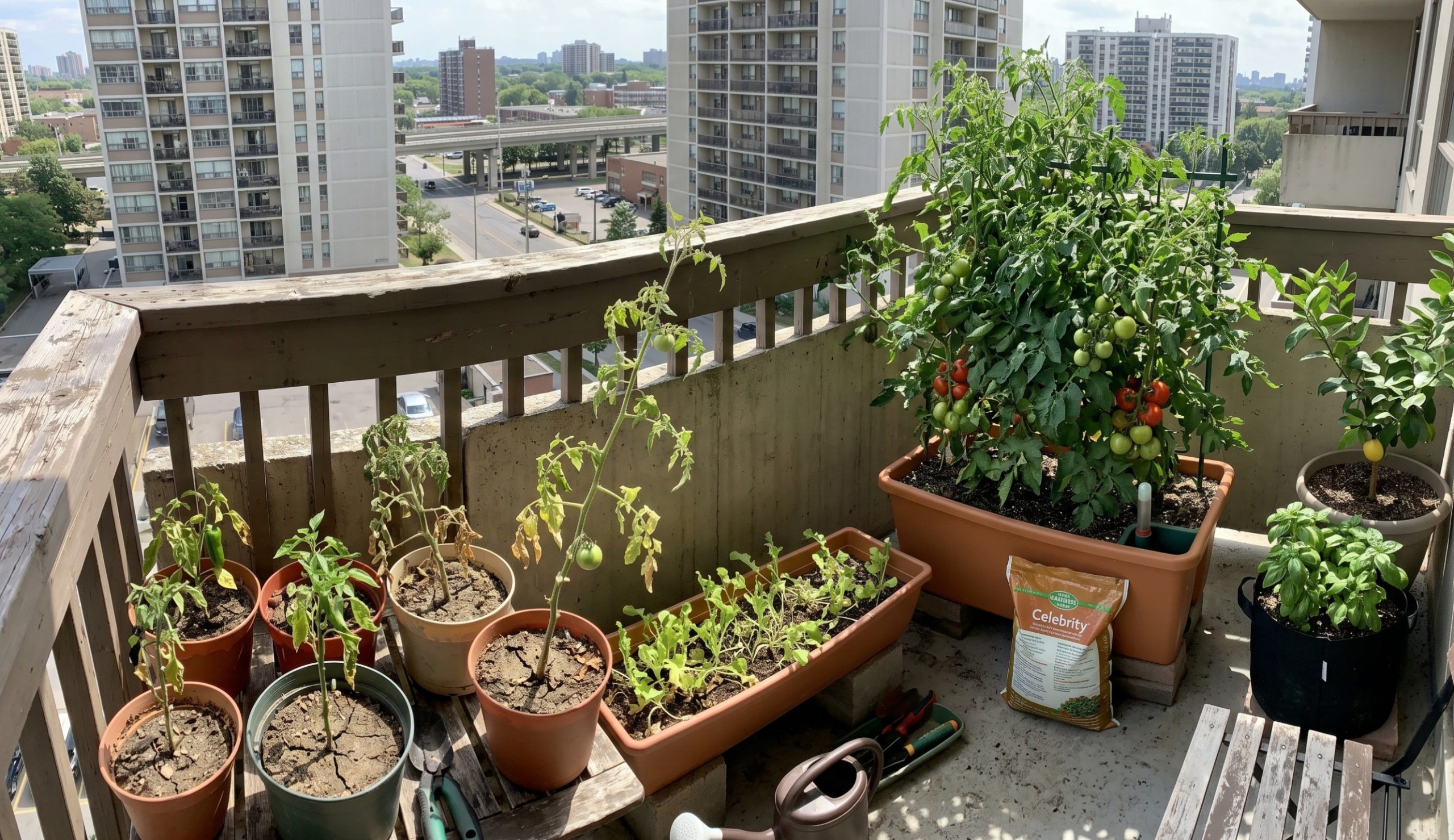
The container is too small. The plant does not get enough sun. The soil dries out. The gardener adds too many crops too quickly. The setup becomes annoying to maintain. Then the garden slowly turns into one more thing to feel guilty about.
That is the part people do not talk about enough.
A failed apartment garden is usually not one big disaster. It is a system that was too fragile from the beginning.
1. The Setup Is Too Complicated
Beginners often try to build the final version of the garden on day one.
They buy too many containers, too many seed packets, too many herbs, too many tomato plants, and too many things they saw online. It feels exciting at first. Then the watering becomes inconsistent, the plants start needing different care, and the whole setup becomes harder to manage than expected.
That is how a garden gets abandoned before anything is ready to harvest.
A better first apartment garden is boring on purpose:
- 2 or 3 reliable crops
- containers with drainage
- one main watering routine
- plants matched to the actual sunlight
Simple gardens survive long enough to teach you something. Complicated gardens punish you before you understand what went wrong.
2. The Plants Do Not Match the Space
Not every vegetable belongs in every apartment garden.
A sunny south-facing balcony can handle different crops than a shaded apartment patio between two buildings. A windy upper-floor balcony is not the same as a protected ground-level patio. A windowsill herb setup is not the same as an outdoor container garden.
This is where plant selection matters.
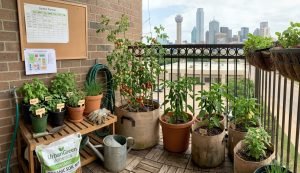
If you are working with a small balcony or patio, start with crops that actually make sense for containers. Herbs, lettuce, green onions, radishes, peppers, bush beans, kale, Swiss chard, and compact cherry tomatoes are usually more realistic than pumpkins, corn, full-size melons, or sprawling squash.
If you need a starting crop list, read Best Vegetables for Balcony Gardens.
3. The Balcony Gets Less Sun Than Expected
Sunlight is where a lot of apartment gardeners get tricked.
A space can look bright without getting enough direct sunlight for fruiting crops. Tomatoes and peppers usually need strong sun to produce well. Lettuce, herbs, and leafy greens can handle less, but they still need a realistic amount of light.
Large buildings, railings, balcony overhangs, trees, nearby apartments, and changing sun angles can all reduce your real growing window.
Before planting, track your light for a few days:
- How many hours of direct sun hit the space?
- Does the sun disappear behind another building?
- Is the strongest sun in the morning or afternoon?
- Are lower containers shaded by the balcony railing?
You should also check your local growing conditions before choosing long-season crops. The USDA Plant Hardiness Zone Map is a useful starting point for understanding your climate.
4. Containers Dry Out Faster Than People Think
Apartment gardens often dry out fast, especially on balconies, patios, rooftops, and concrete surfaces.
Containers hold less soil than in-ground gardens. Less soil means less moisture storage. Add heat, wind, and reflected sun from concrete or brick, and a plant can become stressed quickly.
This is why watering “whenever you remember” does not work well.
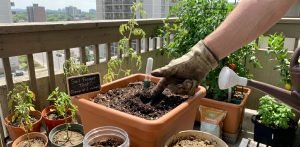
Check the soil instead of guessing. Stick your finger into the top inch or two. If it feels dry, water deeply. If it still feels moist, wait.
Virginia Cooperative Extension notes that container plants can dry out quickly, especially on concrete patios in full sun, and may need daily or even twice-daily watering once established. Their container vegetable gardening guide is a good reference for practical container care.
5. The Containers Are Too Small
Small containers are one of the quietest harvest killers.
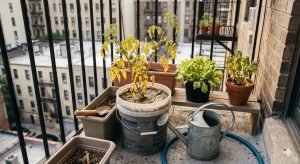
A tiny pot may look fine when the plant is young, but vegetables need root space to support growth above the soil. When the container is too small, the plant dries out faster, runs out of nutrients sooner, and becomes stressed before harvest.
That does not always mean the plant dies immediately.
Sometimes it stays alive but never produces much.
That is worse, because the gardener keeps waiting for a harvest that the plant was never set up to deliver.
For a deeper breakdown, read Container Gardening Mistakes That Kill Harvests.
6. The Garden Gets Overcrowded
Overcrowding feels productive at first.
More plants must mean more food, right?
Not in a container garden.
Too many plants in one container compete for the same water, nutrients, light, and root space. Airflow drops. Disease pressure increases. Every plant becomes weaker than it should be.
One healthy pepper plant in the right container can outperform three stressed pepper plants fighting for space.
7. There Is No Actual System
This is the unglamorous truth.
Apartment gardens fail when they depend on memory, motivation, and random effort.
You need a simple system:
- what you planted
- when it was planted
- how often it needs water
- when harvest should start
- what tasks need attention this week
That is exactly why the Urban Green America Garden Planner exists. A small-space garden gets much easier when you can plan the layout, track plant care, and stop guessing what needs to happen next.
8. People Quit Too Early
This might be the most frustrating one.
Many plants look unimpressive for a while before they start producing. Roots are developing. The plant is adjusting. Growth may feel slow. Then, suddenly, things start moving.
Beginners often quit during the boring middle.
They stop watering consistently. They stop checking the plants. They assume nothing is happening. Then the garden collapses right before it might have started working.
Gardening rewards consistency more than intensity.
You do not need to obsess over the plants all day. You need a repeatable routine you can actually maintain.
The Better Way to Start an Apartment Garden
Do not start by asking, “How much can I fit?”
Start by asking:
- How much direct sunlight do I actually get?
- How much time can I realistically give this each week?
- Which crops are easiest for this space?
- Can I water consistently?
- Do my containers drain properly?
That sounds less exciting than building a giant balcony jungle immediately, but it works better.
Start small. Get one harvest. Build confidence. Then expand.
You can also grab the free Urban Green America guide if you want a simpler way to start without overbuilding your setup.
Final Thoughts
Apartment gardens fail before harvest when the system is too weak to survive real life.
Not because the gardener is hopeless.
Not because apartments cannot grow food.
Not because a backyard is required.
Most failures come from poor plant selection, bad container choices, inconsistent watering, weak sunlight, overcrowding, and setups that become too annoying to maintain.
The fix is not to try harder.
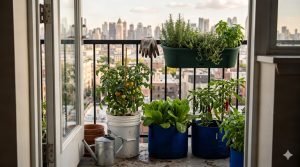
The fix is to build a simpler garden that matches the space you actually have.
FAQ: Why Apartment Gardens Fail Before Harvest
Why do apartment gardens fail before harvest?
Apartment gardens usually fail before harvest because of poor sunlight, small containers, inconsistent watering, overcrowding, weak soil, or setups that become too complicated to maintain. Most failures are system problems, not gardener problems.
Can you really grow vegetables in an apartment?
Yes. Many vegetables and herbs can grow in apartment settings, especially on balconies, patios, windowsills, and under grow lights. The key is choosing crops that match your available light, space, and container size.
What are the easiest crops for apartment gardens?
Some of the easiest crops for apartment gardens include herbs, lettuce, green onions, radishes, kale, Swiss chard, peppers, and compact cherry tomatoes. These crops tend to work better in containers than large sprawling vegetables.
How much sunlight does an apartment garden need?
Most fruiting vegetables need 6 or more hours of direct sunlight to produce well. Leafy greens and herbs can often handle less light. Apartment gardeners should track direct sunlight before choosing plants.
Why do my apartment garden plants grow but not produce food?
Plants may grow without producing because they lack sunlight, nutrients, pollination, root space, or consistent watering. Fruiting crops like tomatoes and peppers often need stronger light and larger containers than beginners expect.
Are balcony gardens better than indoor gardens?
Balcony gardens usually provide better sunlight and airflow than indoor gardens, but they can also face more wind, heat, and moisture loss. Indoor gardens can work well for herbs, microgreens, and leafy greens when natural light or grow lights are available.
How do I stop my apartment garden from failing?
Start with a small number of easy crops, use containers with drainage, track sunlight, water based on soil moisture, avoid overcrowding, and choose plants that fit your space. A simple garden is usually more successful than an overloaded setup.
Do apartment gardens need a planner?
A planner helps because small-space gardens are easy to forget or mismanage. Tracking planting dates, watering needs, harvest timing, and plant notes can prevent common mistakes and make the garden easier to maintain.