How Often Should You Water Container Vegetables?
If you’re trying to grow food in containers, one question shows up faster than almost any other:
How often should you water container vegetables?
The frustrating answer is that there isn’t a fixed schedule.
Many beginner gardeners want someone to tell them to water every morning or every other day. That sounds simple, but container vegetables do not care what day it is. They care about moisture levels, temperature, sunlight, wind, container size, and the type of plant you’re growing.
This is why two tomato plants sitting ten feet apart can need completely different watering schedules.
One might be thriving while the other is stressed and struggling.
Understanding how container watering actually works can prevent many of the problems that cause balcony gardens, patio gardens, and apartment gardens to fail before harvest.
Why Container Vegetables Need More Water
Container gardens operate differently than in-ground gardens.
Vegetables growing in a traditional garden bed can send roots deeper into the soil to find moisture. Container plants have limited soil volume. Once that moisture is gone, the plant has nowhere else to go.
That means containers dry out faster.
Add direct sunlight, wind, hot surfaces, concrete patios, or apartment balconies and the soil can lose moisture surprisingly quickly.
This is one reason many gardeners struggle with container gardening mistakes. The watering habits that work in a backyard often fail in containers.
How Often Should You Water Container Vegetables?
Most container vegetables should be checked daily.
Notice the wording.
Checked daily.
Not necessarily watered daily.
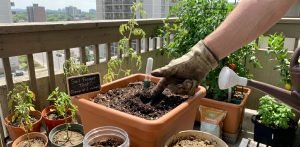
The correct approach is to check the soil and water when the plant actually needs it.
During mild weather, some containers may only need water every few days.
During summer heat, especially in urban environments, some vegetables may need water every day.
Large tomato containers on sunny apartment balconies can occasionally require watering twice per day during extreme heat.
The schedule changes because conditions change.
Stop Watering On A Schedule
This is one of the biggest mindset shifts for new gardeners.
Watering every Monday, Wednesday, and Friday sounds organized, but it often creates problems.
A cool cloudy week requires less water than a hot windy week.
A lettuce container needs different care than a tomato container.
A deep grow bag behaves differently than a shallow decorative planter.
Instead of following the calendar, check the soil.
That one habit will improve your results more than most fertilizers, gadgets, or watering systems.
How To Check Soil Moisture
The simplest method is still the best.
Stick your finger into the soil about one to two inches deep.
- If the soil feels dry, water deeply.
- If it still feels moist, wait.
- If it feels soggy, you may be overwatering.
Many gardeners kill productivity by watering automatically without checking moisture first.
Overwatered plants often look surprisingly similar to underwatered plants, which creates even more confusion.
Can You Overwater Container Vegetables?
Absolutely.
In fact, many beginners are more likely to overwater than underwater.
Roots need oxygen as much as they need water.
When soil remains constantly saturated, oxygen gets pushed out and root health declines.
The plant may:
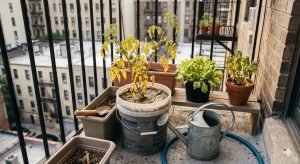
- yellow
- wilt
- drop flowers
- stop growing
- become vulnerable to disease
This is why drainage matters.
Every container should have proper drainage holes.
Pretty containers without drainage often create more problems than they solve.
Why Balcony Gardens Dry Out Faster
Urban gardeners face challenges that traditional backyard gardeners don’t always experience.
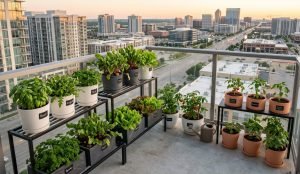
Apartment balconies and patios often experience:
- reflected heat
- high wind exposure
- hot concrete surfaces
- limited soil volume
- intense afternoon sun
All of these factors increase moisture loss.
This is one reason many apartment gardens fail before harvest.
The gardener assumes the watering needs are the same as a backyard garden when the growing environment is completely different.
Container Size Changes Everything
Container size has a massive impact on watering frequency.
Small containers dry out quickly.
Large containers hold moisture longer.
A tomato growing in a tiny decorative pot may need constant attention.
The same tomato growing in a large container or grow bag will generally have a much more stable moisture supply.
This is one reason successful balcony gardens often rely on larger containers whenever possible.
Morning Or Evening?
Morning is usually best.
Watering in the morning allows plants to start the day hydrated.
It also reduces the amount of moisture sitting on leaves overnight, which can help reduce disease pressure.
Evening watering is sometimes necessary during hot weather, but morning watering should generally be the default routine.
How Much Water Do Tomatoes Need?
Tomatoes are often the crop that causes the most frustration.
They dislike inconsistent watering.
Too little water stresses the plant.
Too much water can damage roots.
Rapid swings between dry and saturated conditions can contribute to cracking fruit and blossom end rot.
The goal is steady moisture.
Not wet soil.
Not dry soil.
Consistent moisture.
Hot Weather Changes The Rules
Many urban gardeners are surprised by how dramatically watering needs increase during summer.
Temperature, wind, humidity, and sunlight all influence moisture loss.
The USDA Hardiness Zone Map can help gardeners understand broader climate conditions:
USDA Plant Hardiness Zone Map
University Extension programs also recommend monitoring container moisture closely during periods of high heat:
University of Minnesota Extension Container Watering Guide
The Goal Is Consistency
The best container gardeners are not the people who water the most.
They’re the people who create consistent growing conditions.
Healthy vegetables thrive when moisture levels remain relatively stable.
That consistency becomes much easier when you track plant care tasks and schedules.
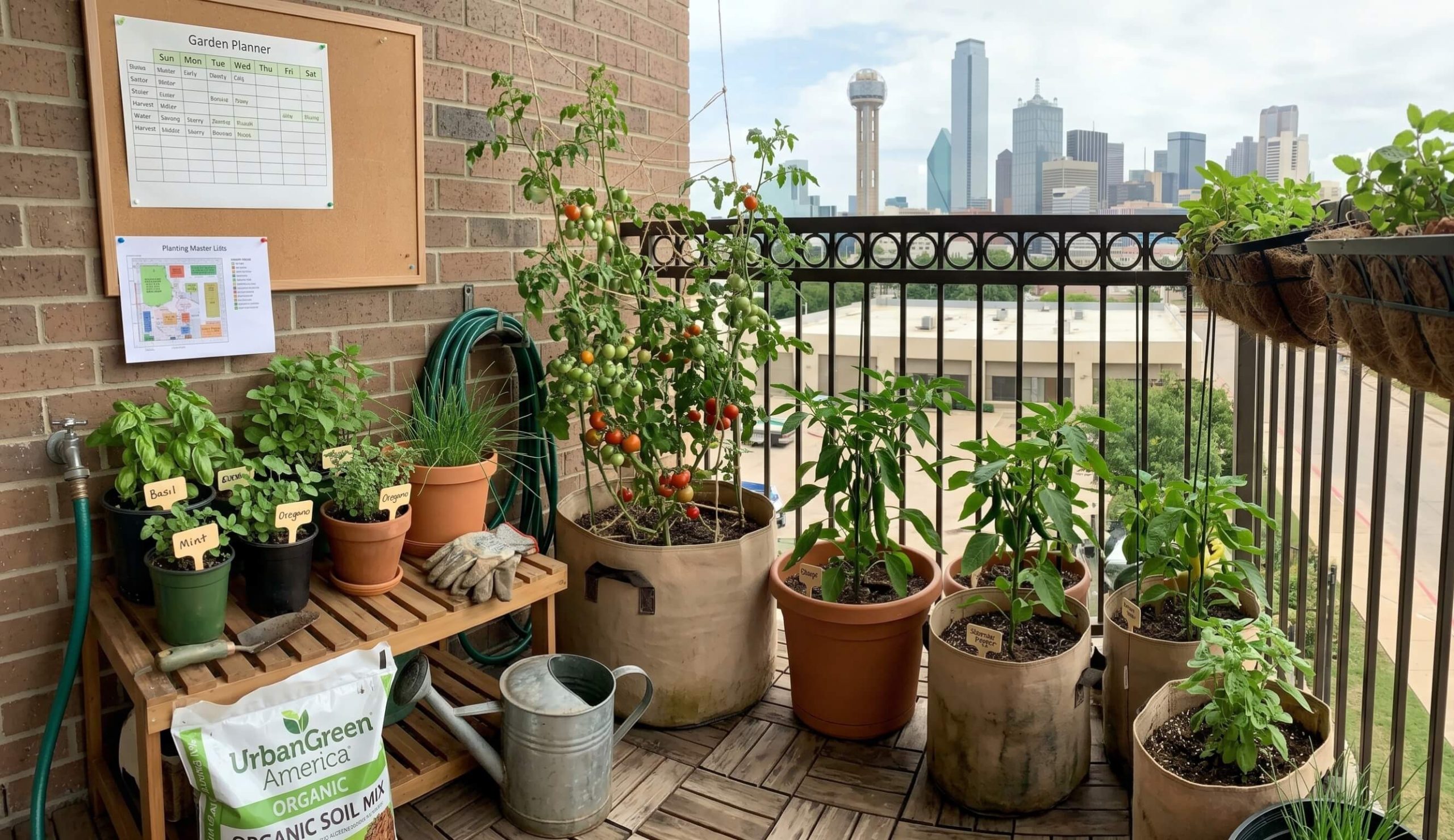
The Urban Green America Garden Planner was built to help gardeners organize watering schedules, planting dates, harvest tracking, and daily garden tasks in one place.
Final Thoughts
Most container vegetables don’t need a rigid watering schedule.
They need attention.
Check the soil.
Pay attention to weather conditions.
Understand your containers.
Learn how your specific growing space behaves.
The gardeners who do this consistently are usually the ones enjoying harvests while everyone else is wondering what went wrong.
FAQ: How Often Should You Water Container Vegetables?
How often should you water container vegetables?
Most container vegetables should be checked daily. Water when the soil feels dry one to two inches below the surface rather than following a strict schedule.
Do container vegetables need water every day?
Not always. During hot weather many containers may require daily watering, while cooler conditions may allow several days between watering sessions.
Can you overwater container vegetables?
Yes. Overwatering can damage roots, reduce oxygen in the soil, and lead to yellowing leaves, poor growth, and disease problems.
Why do container gardens dry out so fast?
Containers hold less soil than traditional garden beds and are exposed to more heat, wind, and sunlight. Urban balconies and patios often accelerate moisture loss.
Should vegetables be watered in the morning or evening?
Morning is usually best because it prepares plants for daytime heat and reduces moisture sitting on leaves overnight.
How do I know if my container vegetables need water?
Check the soil with your finger. If the top one to two inches feel dry, it is usually time to water.
Do tomatoes need more water than other vegetables?
Tomatoes often require consistent moisture and can be sensitive to watering fluctuations, especially during fruit production.
What happens if container vegetables dry out completely?
Plants become stressed, growth slows, flowers may drop, and harvest production can decline significantly.