Why Apartment Gardens Fail Before Harvest
Most apartment gardens don’t fail because people “lack a green thumb.”
They fail because urban gardening is completely different from traditional backyard gardening — and most beginner advice ignores that reality.
A balcony in Dallas behaves differently than a raised bed in the suburbs.
A patio in Phoenix faces different challenges than a rooftop in Chicago.
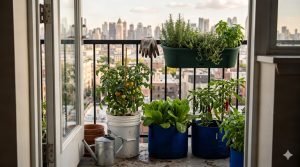
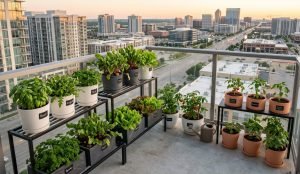
Heat reflects off concrete. Containers dry out fast. Sunlight gets blocked by buildings. HOAs limit setups. And beginners usually start with the wrong plants entirely.
Then they assume they’re the problem.
They’re not.
The setup is.
The Reality Nobody Talks About
Social media has made urban gardening look deceptively easy.
You see:
- overflowing tomato plants
- perfect raised beds
- giant harvest baskets
- cinematic watering clips
What you don’t see:
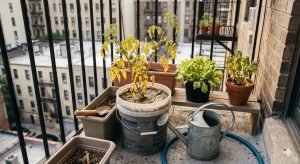
- dead containers in July
- bolted lettuce
- underwatered herbs
- rootbound plants
- failed transplant attempts
- 100-degree balcony heat
Urban gardening has environmental stress most beginner guides completely ignore.
That’s why so many apartment gardens fail before the first real harvest.
The 5 Biggest Reasons Apartment Gardens Fail
1. Growing the Wrong Crops
This is the biggest mistake by far.
Most beginners immediately try:
- tomatoes
- cucumbers
- broccoli
- cauliflower
Those crops can absolutely work — but they are not the easiest starting point for small-space growing, especially in hot metro climates.
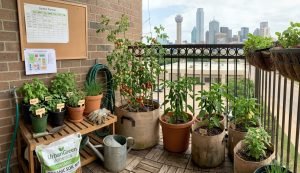
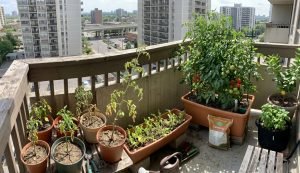
A west-facing balcony in Texas can become an oven by late afternoon.
Large fruiting plants struggle in containers if:
- root space is limited
- watering is inconsistent
- heat stress spikes
- airflow is poor
Instead, beginners should start with crops that:
- recover quickly
- tolerate container life
- produce repeatedly
- handle imperfect conditions
Better beginner apartment crops include:
- basil
- mint
- green onions
- lettuce
- kale
- peppers
- Swiss chard
- bush beans
Early success matters.
One healthy harvest builds momentum.
Repeated failure kills it.
2. Misunderstanding Sunlight
Most people dramatically overestimate how much sun their space actually gets.
“Bright” does not mean “full sun.”
A balcony may only receive:
- 2–4 hours of direct light
- reflected light only
- harsh afternoon-only exposure
Those conditions matter.
Tomatoes that need 6–8 hours of direct sunlight will struggle in partial exposure.
Meanwhile, these crops can still perform reasonably well:
- herbs
- leafy greens
- chard
- mint
Before buying plants, track:
- morning sunlight
- afternoon sunlight
- shaded periods
- reflected building heat
This single step prevents massive frustration later.
3. Containers Dry Out Faster Than People Expect
Container gardening is unforgiving.
Especially in cities like:
- Houston
- Phoenix
- Las Vegas
Concrete, walls, and patios trap heat.
Small containers can dry out in hours during summer.
Most beginners:
- underwater inconsistently
- overcorrect afterward
- create root stress cycles
Then plants decline rapidly.
The solution is not “water more randomly.”
The solution is:
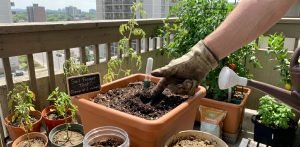
- larger containers
- better soil
- mulch
- consistent watering routines
- crop selection that matches the environment
Small decorative pots look good online.
But many are terrible for food production.
4. Overcrowding Everything
Beginners almost always plant too much.
Why?
Because empty containers look “unfinished.”
But overcrowding creates:
- poor airflow
- disease pressure
- weak root systems
- nutrient competition
- stunted growth
One healthy pepper plant can outperform three overcrowded struggling ones.
Urban gardening rewards efficiency — not maximum density.
This is especially true in apartment spaces where airflow is already limited.
5. No System = Garden Chaos
This is the silent killer.
Most apartment gardeners start with enthusiasm but no operational system.
They don’t track:
- planting dates
- watering
- fertilizing
- pruning
- succession planting
- harvest timing
Eventually the garden becomes reactive instead of manageable.
That’s when people say:
“I just couldn’t keep up with it.”
The problem usually wasn’t effort.
It was lack of organization.
A productive garden is not just plants.
It’s workflow.
What Beginners Should Actually Focus On
The goal of your first apartment garden should not be maximum production.
That mindset causes people to overload themselves immediately.
The real goal is:
- building consistency
- understanding your environment
- learning container behavior
- creating sustainable routines
That means starting smaller than you think.
A successful setup might only include:
- 2 peppers
- basil
- green onions
- lettuce
- one grow bag
That’s enough to learn:
- watering patterns
- sunlight behavior
- seasonal timing
- plant stress signs
And most importantly:
- confidence
Urban Gardening Is Becoming More Important
Food prices continue rising.
Outdoor space keeps shrinking.
More people are living in:
- apartments
- condos
- rentals
- HOA-controlled neighborhoods
At the same time, more people want:
- healthier food
- reduced grocery costs
- greater self-sufficiency
- connection to what they eat
Urban gardening is no longer a niche hobby.
It’s becoming a practical life skill, especially in large metropolitan areas where outdoor growing space is limited.
Final Thoughts
Most apartment gardens fail before harvest because people try to force traditional gardening advice into urban environments.
That approach breaks quickly.
Urban gardening requires:
- smarter crop selection
- environmental awareness
- heat management
- realistic expectations
- consistent systems
The good news?
You do not need:
- a backyard
- raised beds
- expensive equipment
- perfect conditions
You just need a setup designed for the reality of modern urban living.
And that changes everything.
FAQ
Why do apartment gardens fail so often?
Most apartment gardens fail because of poor sunlight, inconsistent watering, overcrowded containers, heat stress, and choosing plants that are not suited for small-space growing.
Can you really grow vegetables in an apartment?
Yes. Many vegetables and herbs grow successfully in containers on balconies, patios, rooftops, or near sunny windows when the right plants and growing conditions are used.
What vegetables grow best in apartment gardens?
Some of the easiest apartment-friendly crops include:
- basil
- lettuce
- peppers
- green onions
- kale
- Swiss chard
- bush beans
These crops adapt well to containers and smaller growing spaces.
How much sunlight do apartment vegetables need?
Most fruiting vegetables like tomatoes and peppers need at least 6–8 hours of direct sunlight daily. Herbs and leafy greens can often tolerate partial sun or filtered light.
Why do container gardens dry out so quickly?
Containers heat up faster than in-ground gardens, especially on balconies and patios surrounded by concrete or reflective surfaces. Small pots also hold less moisture, causing soil to dry rapidly during hot weather.
Are balcony gardens worth it financially?
Growing high-cost crops like herbs, lettuce, peppers, and green onions can reduce grocery spending over time, especially in large metropolitan areas where fresh produce prices are higher.
What is the biggest mistake beginner apartment gardeners make?
Most beginners try to grow too many large crops too quickly. Overcrowding containers, poor planning, and choosing difficult plants often lead to frustration before the first harvest.
How do I keep an apartment garden organized?
Planning container layouts, tracking watering schedules, managing sunlight exposure, and spacing plants properly helps prevent apartment gardens from becoming overcrowded or difficult to maintain.