
5 Tips for Balcony Gardening
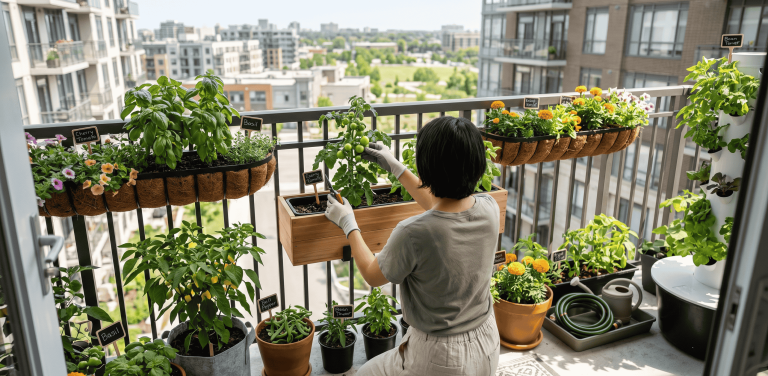
Assess Your Balcony’s
Environment
- Sunlight:
Determine how much sunlight your balcony gets.
Balconies with 6+ hours of direct sun are ideal for
full-sun plants like tomatoes, peppers, and
marigolds. If your space gets 3-6 hours, go for
partial-sun options like lettuce, ferns, or herbs.
For shaded balconies, consider shade-loving plants
like ivy, caladium, or mint.
- Wind:
High-rise balconies often experience strong winds that can damage delicate plants. Opt for hardy varieties like lavender, rosemary, or succulents, and use windbreaks like mesh screens or trellises to protect more fragile plants.
- Temperature:
Urban balconies may heat up quickly during summer or chill rapidly during winter. Choose heat-tolerant plants like basil or drought-tolerant flowers and bring temperature-sensitive plants indoors or cover them during extreme weather.
Ideal Plant Types for Balconies
- Edible Plants:
Grow your own food with compact vegetables like cherry tomatoes, dwarf peppers, or baby carrots. Herbs like thyme, parsley, and cilantro are also excellent choices for small pots.
- Ornamental Plants:
Brighten up your balcony with colorful blooms like petunias, pansies, and geraniums.
- Trailing or Climbing Plants:
Maximize vertical space with vining plants like morning glories, nasturtiums, or English ivy, which can climb trellises or railings.
Pro Tip
Mix ornamental and edible plants for a visually stunning display that’s both functional and beautiful. For instance, marigolds can deter pests while adding pops of color to your edible garden.
2. Use Lightweight Containers
Being mindful of weight is crucial when gardening on balconies, as these spaces often have weight limits. Choosing lightweight, versatile containers allows you to scale up your garden while keeping it balcony-friendly.
Types of Containers to Consider
- Plastic and Fabric Pots:
Lightweight and easy to move, plastic or fabric pots come in various sizes and shapes to suit any garden. Fabric grow bags are especially great for vegetables like potatoes and carrots, as they allow for excellent drainage and aeration.
- Hanging Pots:
Choose sturdy, lightweight materials like resin or plastic for hanging pots to avoid putting strain on beams or supports.
- Self-Watering Containers:
These are great for reducing the fuss of daily watering while keeping plants consistently hydrated.
Tips for Smart Container Gardening
- Go for wide, shallow containers for herbs or greens, and deeper pots for root vegetables.
- Add wheels or trays to large pots to make them easy to relocate when needed.
- Avoid using heavy materials like ceramic or terracotta unless placing them on sturdy, weight-bearing surfaces.
Pro Tip
Upcycle everyday items like buckets, cans, or crates to create unique, lightweight planters.
3. Optimize Vertical Space
When floor space is limited, think upward! Vertical gardening techniques allow you to grow more plants without taking up precious balcony real estate. Plus, vertical elements can add charm and transform your balcony into a green oasis.
Vertical Gardening Ideas
- Wall-Mounted Planters:
Use modular wall planters that can hold herbs, succulents, or flowers. These sleek systems are perfect for small spaces and easy to maintain.
- Trellises and Climbing Supports:
Install trellises for climbing plants like cucumbers, pole beans, or bougainvillea. These structures save space and offer privacy when placed along balcony edges.
- Hanging Baskets:
Suspend lightweight pots with trailing plants like nasturtiums or cascading ferns from the ceiling or railing. Hanging baskets are space-efficient and add a lush, layered aesthetic to your garden.
- Shelves and Tiered Stands:
Stack pots vertically using shelves or tiered stands. This increases growing area while keeping plants organized and accessible.
Pro Tip
Repurpose items like shower caddies, ladders, or old pallets as creative and cost-effective vertical planters.
4. Manage Sunlight Effectively
Sunlight is one of the most critical factors in gardening success, especially for compact balcony spaces. Creating an ideal light balance ensures your plants grow healthy and thrive.
How to Maximize Sunlight
- Map Sun Patterns:
Observe how sunlight moves across your balcony throughout the day. Map out which areas receive full sun, partial sun, or shade.
- Adjust Plant Placement:
Position sun-loving plants like tomatoes or peppers in the brightest spots, while shade-preferring plants like ferns can thrive in sheltered corners.
- Use Reflective Surfaces:
Use light-colored walls or reflective tiles to bounce sunlight onto shaded plants.
- Supplement with Grow Lights:
For shaded or indoor balconies, consider installing LED grow lights to provide plants with the light they need.
Pro Tip
Rotate pots occasionally to ensure all sides of the plants receive equal sunlight exposure and grow evenly.
5. Maintain Proper Drainage
Good drainage is crucial for balcony gardens, as poor water management can lead to root rot, overly damp conditions, or water spills that drip onto neighbors’ spaces below. Ensuring proper drainage keeps plants healthy and prevents damage to your balcony or surrounding areas.
How to Ensure Proper Drainage
- Choose Drainage-Friendly Pots:
Always use containers with drainage holes to allow excess water to escape.
- Add Layers for Drainage:
Place a layer of gravel, pebbles, or coarse sand at the bottom of pots to improve drainage and prevent waterlogging.
- Use Saucer Trays:
Catch excess water using saucers or trays under pots. This helps prevent water from dripping onto balconies below, especially in apartment buildings.
- Check and Adjust Watering:
Stick to a consistent watering schedule but check soil moisture before watering. Overwatering is a common problem for balcony gardens.
Pro Tip
Consider using drip irrigation systems or self-watering pots to maintain optimal hydration without the risk of overwatering.
Planning your layout before planting can save space, improve airflow, reduce overcrowding, and help you grow more efficiently in small urban environments.
Final Thoughts
Balcony gardening combines creativity, efficiency, and sustainability to turn even the smallest urban spaces into lush, productive gardens. By choosing the right plants, utilizing vertical space, managing sunlight effectively, selecting lightweight containers, and maintaining proper drainage, you can create a thriving garden that’s both functional and visually captivating. Whether it’s a peaceful retreat or a miniature farm-to-table garden, your balcony can become a green haven with just a little planning and care. Start small, get creative, and watch your space come to life!